

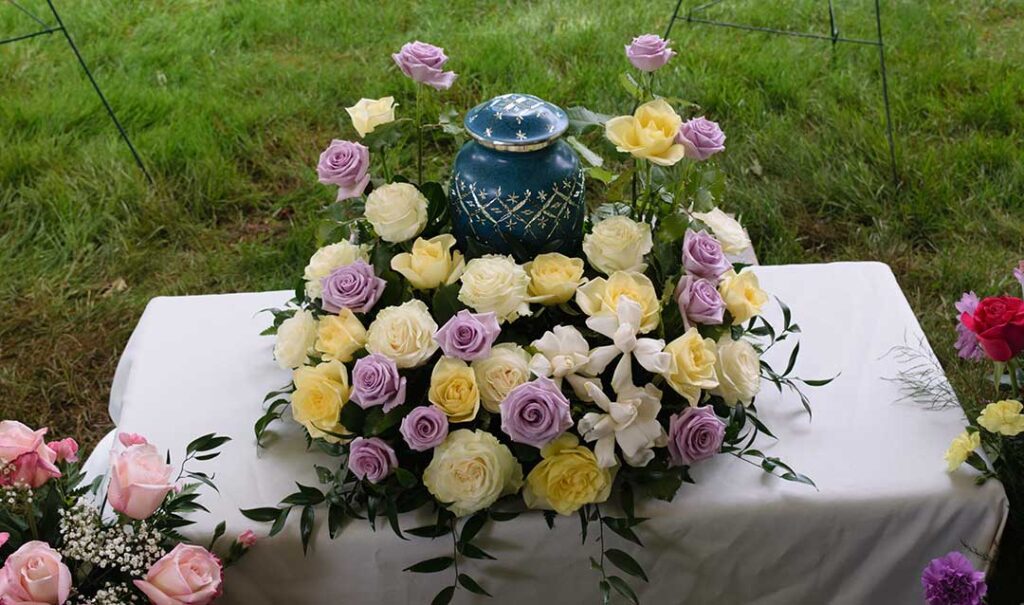
Flowers often appear at funerals because they express sympathy, honor a person’s life, and provide comfort when words are difficult. Their color, type, arrangement, and placement can carry meaning, but there is no single correct choice. For families in Taylorsville, UT, floral decisions are usually shaped by personal beliefs, cultural traditions, practical needs, and the wishes of the person who died.
Why are flowers used at funerals?
Flowers have long been associated with remembrance, beauty, and the temporary nature of life. Their presence can soften a formal setting, create a sense of welcome, and visually communicate care for the family.
At a funeral or memorial service, flowers may:
- Express condolences when spoken words feel inadequate
- Honor the personality, interests, or favorite colors of the person who died
- Represent love, friendship, respect, faith, or gratitude
- Provide a focal point near a casket, urn, photograph, or memorial table
- Help family members and visitors participate in the service
- Bring warmth and natural beauty to an otherwise solemn environment
Flowers are not required for a meaningful funeral. Some families prefer photographs, personal belongings, charitable donations, candles, written memories, or other forms of tribute. The most appropriate choice is the one that reflects the family’s values and the wishes of the deceased.
What do different funeral flowers symbolize?
Flower meanings vary by culture and personal interpretation, but several traditional associations are commonly recognized.
Lilies are often connected with peace, renewal, and the hope of restored innocence. White lilies are frequently chosen for religious or formal services, although their strong fragrance may not suit every setting.
Roses can communicate different emotions depending on their color. Red roses are commonly associated with love and respect, while white roses may suggest reverence, purity, or peace. Pink roses can express affection, appreciation, and gentleness.
Carnations are valued for their durability and wide range of colors. Red carnations may represent admiration, white carnations remembrance, and pink carnations lasting affection.
Chrysanthemums hold different meanings across cultures. In some traditions, they are strongly associated with mourning and memorial observances. In others, they are viewed simply as long-lasting seasonal flowers.
Orchids may symbolize enduring love, strength, and beauty. Their structured appearance can be appropriate for someone remembered as elegant, resilient, or distinctive.
Sunflowers often represent warmth, optimism, and a bright personality. They may be selected for a person who enjoyed gardening, summer gatherings, or cheerful colors.
Daisies and wildflowers can create a more informal and personal tribute. They may reflect simplicity, an outdoor lifestyle, youthfulness, or a preference for natural arrangements.
These meanings are guidelines rather than rules. A favorite flower may be more meaningful than a traditional funeral flower, even if its customary symbolism is unrelated to mourning.
How should families choose flowers for a funeral?
The best floral choice usually begins with the person being remembered. Consider favorite flowers, hobbies, clothing colors, garden interests, cultural background, religious beliefs, and the overall tone of the service.
A formal ceremony may call for a restrained arrangement in soft or neutral colors. A celebration of life may feel more appropriate with bright colors, mixed flowers, or plants connected to the person’s home and interests. For a child or young adult, families may choose flowers that reflect personality, favorite activities, or meaningful colors rather than traditional funeral customs.
The setting also matters. Large arrangements may be suitable for a spacious service room but difficult to place in a smaller gathering area. If the service includes a cremation urn, photographs, or memorabilia, flowers should support those elements rather than block them.
Families may also want to consider whether the person left instructions about flowers. Some people request flowers, while others ask for donations, tree planting, food support, or another memorial gesture instead.
What is the difference between funeral flowers and sympathy flowers?
Funeral flowers are generally sent for display at the service, visitation, or memorial ceremony. Sympathy flowers are often sent to the family’s home or another location before or after the service.
Common funeral arrangements include:
- Casket sprays placed over or near a casket
- Standing sprays displayed on an easel
- Wreaths and circular arrangements
- Floral crosses or other religious shapes
- Urn arrangements designed for cremation services
- Small bouquets placed near photographs or memory tables
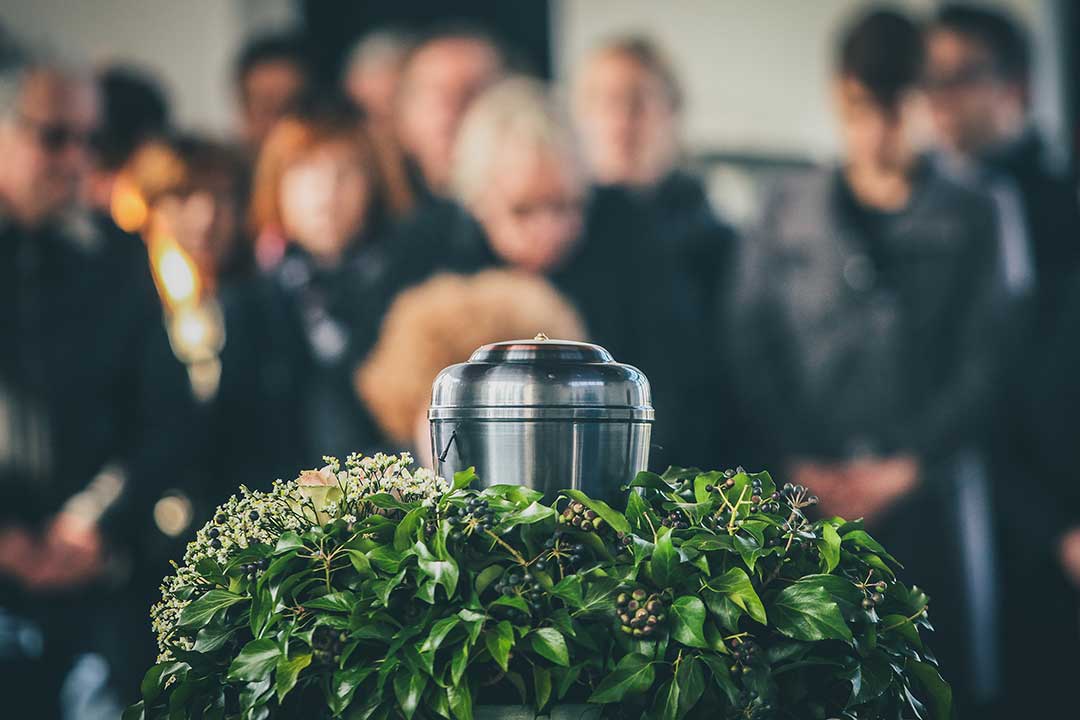
Sympathy arrangements are usually smaller and easier to keep in a home. A vase arrangement, flowering plant, or modest bouquet may be more practical than a large ceremonial display.
If an announcement specifies “in lieu of flowers,” that request should be respected. It does not necessarily mean flowers are unwelcome; it means the family has identified another form of remembrance as more meaningful.
Are there practical concerns with funeral flowers?
Yes. Flowers require consideration beyond appearance. Strong fragrances may be uncomfortable for people with allergies, asthma, migraines, or sensitivity to scents. Low-fragrance flowers can be a better choice in enclosed rooms.
Seasonal conditions also matter. In Taylorsville, UT, dry air, summer heat, winter cold, and temperature changes can affect how long flowers remain fresh. Arrangements left in a vehicle, near a heater, or in direct sunlight may wilt quickly. During warmer months, flowers should be kept cool and out of direct sun. During freezing weather, delicate stems and petals may be damaged if arrangements are transported or stored outdoors.
Water-filled vases can be heavy and may spill during transportation. Floral foam arrangements should be handled carefully, especially around children, pets, or crowded spaces. After the service, families may need to decide who will take arrangements home and how to divide them respectfully.
Some facilities have rules about candles, plants, floral stands, or the placement of arrangements. Confirming those guidelines in advance can prevent confusion on the day of the service.
What happens to flowers after the funeral?
Flowers may be taken home by relatives, distributed among close friends, or used to decorate a graveside gathering or reception. Some families press selected petals, dry flowers, or save a small portion of an arrangement as a keepsake.
Flowers that are no longer fresh can be composted where local household practices allow. Certain arrangements may contain floral foam, wire, plastic wrapping, or other materials that need to be separated before disposal. Potted plants can sometimes be replanted, but they require suitable light, water, and seasonal care.
A family may also choose to leave flowers at a gravesite. Before doing so, check cemetery rules about artificial flowers, containers, seasonal decorations, and removal schedules. Rules can differ by property, and unattended arrangements may be removed during maintenance.
Are flowers appropriate for every funeral tradition?
No. Funeral customs differ widely among religions, cultures, and families. Some traditions welcome abundant flowers, while others use simple arrangements or avoid flowers entirely. Certain communities may have preferred colors, specific symbolic flowers, or guidelines about where flowers should be placed.
When customs are unfamiliar, a respectful approach is to follow the family’s instructions or ask a close relative what would be appropriate. A simple arrangement in understated colors is often less intrusive than a highly personalized display when the family’s preferences are unknown.
Flowers are most meaningful when they support the purpose of the gathering: remembering a person, acknowledging grief, and offering care to those who are mourning. Their value comes not from size or expense, but from the thought and relationship they represent.